 LED Savings
Efficacy Index
← Back to guides
LED Savings
Efficacy Index
← Back to guides
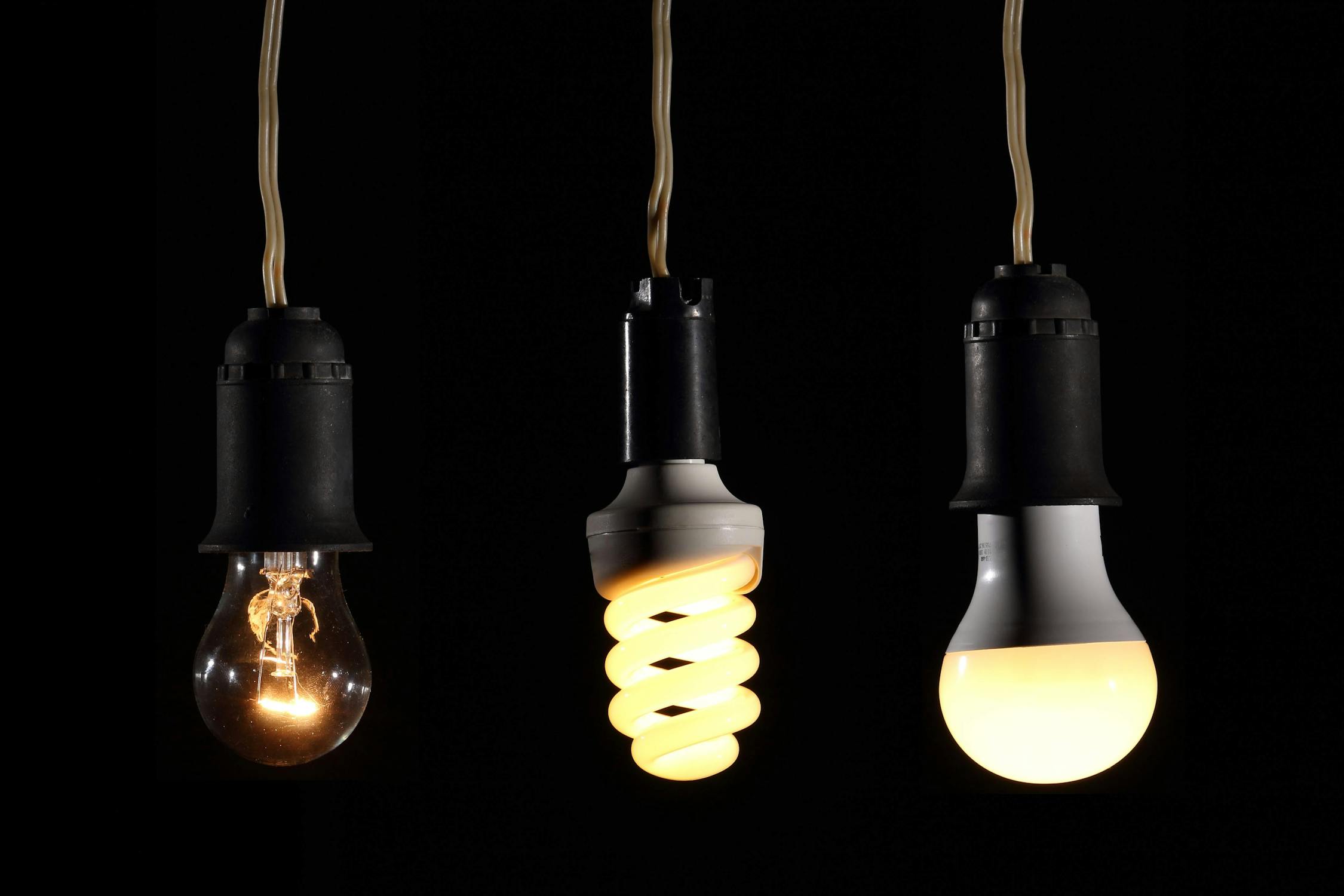
The Phoebus Cartel: A Very Brief History
In December 1924, representatives from General Electric (USA), Osram (Germany), Philips (Netherlands), Associated Electrical Industries (UK) and several other national manufacturers met in Geneva. They formed a cartel they called Phoebus S.A., and they agreed on a target: no light bulb sold by any member company would be rated for more than 1,000 hours of life.
At the time of the agreement, bulbs were routinely lasting 1,500 to 2,500 hours. The cartel did not achieve shorter life through inferior manufacturing. Their engineers actively redesigned the bulbs to fail sooner. Members were fined if their products tested above the agreed limit. The cartel maintained detailed records of testing results and enforced the standard for over a decade.
The commercial logic was straightforward. A lamp that lasts 2,500 hours gets replaced less than half as often as one rated for 1,000. Replacement volume was the entire business model. A lamp that genuinely never needed replacing was an existential threat.
This is documented fact. The Phoebus Cartel is covered in academic literature, including Markus Krajewski's 2014 paper "The Great Lightbulb Conspiracy" published in IEEE Spectrum. The cartel's own records survived and were analysed by researchers. It is not disputed.
The cartel dissolved around 1939 as the Second World War disrupted international trade. But the lesson it taught (that lamp life is a commercial variable, not just an engineering outcome) did not disappear with it.
The LED Promise: 50,000 Hours Was Going to Change Everything
When LED technology started going mainstream around 2010 to 2015, the lighting industry faced something it had never really dealt with before. A lamp technology that genuinely could last 50,000 hours. At eight hours per day, that is over 17 years. In a commercial building running 12 hours per day, it is still more than 11 years.
For electricians and building managers, this was extraordinary. No more lamp replacement rounds. No more cherry-picker hire for high-bay fittings. No more stocking hundreds of different globe types. The total cost of ownership calculation for LED was compelling.
For manufacturers whose revenue had been built on replacement cycles for 80 years, it was a problem.
The Replacement Maths
A warehouse with 200 x 400W metal halide highbays replaces lamps every 12,000 hours (the rated life on quality MH). At 16 hours per day, that is every 2 years.
Each replacement round: 200 lamps at $40 each = $8,000 in lamps alone, plus labour.
Replace those with LEDs rated at 50,000 hours: the same replacement round would not be due for 8.5 years. At 100,000 hours, it is 17 years.
That is the revenue that disappears from the lamp sales side of the industry.
What Actually Happened: The Race to the Bottom
The Australian LED market from roughly 2012 onwards followed a pattern that anyone in the trades will recognise. Chinese manufacturing scaled fast. Import prices collapsed. Contractors were forced to compete on fixture price because that was what clients asked about. Quality suffered in ways that were almost invisible at point of sale.
Three technical shortcuts, in particular, quietly destroyed the performance promise of LED:
1. Thermal management was gutted
The rated life of an LED chip depends almost entirely on junction temperature: the temperature at the actual semiconductor junction inside the package. LED manufacturers rate chips at 25 degrees Celsius. A fitting running in a ceiling cavity in summer, in Queensland, might see ambient temperatures of 45 to 55 degrees at the driver. Junction temperature could be 20 to 30 degrees higher again.
Every 10 degrees of additional junction temperature roughly halves LED life. A chip rated at 50,000 hours at 25 degrees might deliver 12,000 to 15,000 hours in a real ceiling at real temperatures. Cheaper fittings use undersized heatsinks and thermally inadequate enclosures. The chip meets its spec in a lab. It does not meet it on your job.
2. Lumen depreciation was hidden in the fine print
LED life is not rated to the point where the lamp fails completely. It is rated to L70: the point where lumen output has dropped to 70 percent of the initial value. So a fitting listed as "50,000 hours" will, at 50,000 hours, be producing 30 percent less light than when it was installed. Many budget fittings are L70 at 30,000 hours. Some are worse.
A warehouse that upgrades to 150-lux LED highbays and then wonders why it feels dimmer five years later has probably hit L70 early. Nobody told them that was in the spec. It was, but it was buried.
3. "Hours" became a fiction
The IES LM-80 test used to generate LED life projections runs chips in controlled lab conditions for 6,000 hours, then extrapolates to 50,000 or beyond using TM-21 modelling. The extrapolation assumes the real-world thermal environment matches the test environment. It rarely does. A rating of 50,000 hours does not mean the fitting in your project will last 50,000 hours. It means it met a lab protocol.
Budget LED reality
- Undersized heatsinks
- High junction temperatures
- L70 at 15,000 to 25,000 hours
- Early driver failures (often before the chip)
- Colour shift over time
- Warranty that expires before the problem appears
What was promised
- 50,000 hours rated life
- Minimal maintenance
- Stable lumen output
- 17+ year service life
- Genuine payback on labour savings
- Set and forget
Nobody in the Australian market deliberately designed products to fail early in the way the Phoebus Cartel engineers did. But the outcome was not entirely different. The replacement cycle survived. Electricians who specified cheap product five to seven years ago are now fielding calls about early failures, dim fittings, and dead drivers. Clients who should not need to touch their lighting for a decade are back on the phone.
The Business Model Nobody Wanted to Talk About
There is a version of this story that is just about cheap manufacturing and race-to-the-bottom import pricing. That version is true, but it is incomplete.
Consider what it means for a lighting manufacturer when a product genuinely lasts 100,000 hours. At 16 hours per day, that fitting will not need replacing for 17 years. The business that for a century sold replacement lamps every 12 to 24 months now has nothing to sell that customer for nearly two decades. The fixture becomes infrastructure (like conduit or switchboards), and infrastructure does not generate recurring revenue.
The brands that built their businesses on lamp replacement volume had a choice. Invest heavily in the quality needed to deliver on the LED promise, and accept that you are transitioning from a consumables business to a capital goods business. Or compete on price in a commoditised market and let quality sort itself out.
Most chose the second path. A handful did not. The ones that did not are now in a position to say something that most of the industry cannot.
Fagerhult's Move: What Flip Chip Technology Actually Means
In early 2026, Swedish manufacturer Fagerhult announced it was upgrading the majority of its indoor luminaire range to the latest generation of Flip Chip LED technology, at no additional cost to customers. The change doubles rated life from 50,000 to 100,000 hours and adds Constant Light Output (CLO) across the range.
Fagerhult is not a budget brand. They are a significant Scandinavian manufacturer with serious sustainability reporting and a reputation that depends on performance claims being accurate. When a company like this makes a public commitment to doubling lamp life and absorbs the cost rather than passing it on, it is worth understanding what the technology actually does.
What is Flip Chip LED Technology?
A standard LED has wire bonds and electrodes mounted on top of the semiconductor die. Those contacts sit in the light path and block some of the emitted photons, reducing efficiency and creating thermal hot spots.
A Flip Chip LED inverts the die so the contact surfaces face down toward the substrate. Nothing obstructs the light path. The result is higher lumen output per watt, better heat dissipation through the substrate (lower junction temperature), and a more robust package with no wire bonds to fatigue.
Lower junction temperature directly translates to longer life. This is not marketing. It is the same physics that governs every other semiconductor. Cooler running means the junction degrades more slowly. Rated life doubles. Lumen depreciation slows.
Fagerhult estimates the change will reduce energy consumption by 5 to 10 percent across the range and achieve annual CO2 savings of approximately 2,250 tonnes from products sold in 2025 alone. The rated operating life goes from 50,000 hours to 100,000 hours. That is not a rounding error.
Flip Chip is not new technology. Cree has used it in premium product lines for years. What is new is a mainstream European manufacturer rolling it out across their entire indoor range at no cost premium. That is a signal about where the industry is heading.
Constant Light Output: The Detail That Changes the Economics
CLO deserves a separate mention because it directly affects the payback calculation on any commercial LED project.
A standard LED fitting is designed to the initial lumen output. It meets its lux target on day one. By year five it is at maybe 80 to 85 percent of initial output, depending on quality. By year ten it might be at L70 or below. The client's lux levels have been degrading the whole time, usually without anyone noticing until it becomes obvious.
CLO fittings use a driver that actively increases current as the LED ages, compensating for lumen depreciation and maintaining consistent light levels across the rated life. The fitting provides stable, consistent illumination from installation to end of life. For applications where lux levels matter (manufacturing, healthcare, retail) this is not optional quality. It is the correct way to specify lighting.
Fagerhult is making CLO standard across the range. That is the right direction.
What Does a Factory Sell When the Bulb Lasts Forever?
This is the question that makes lighting executives uncomfortable. And it is the question that explains a lot of what happened to LED quality over the past decade.
The honest answer is that the business model has to change. The manufacturers and distributors who are thinking clearly about this have already started the transition. The revenue moves from the fixture and lamp to the intelligence layer on top of it.
| Old model | Emerging model |
|---|---|
| Lamp replacement volume | Lighting controls and commissioning |
| Emergency callout for failed fittings | Ongoing energy monitoring and tuning |
| Sell fittings on price per unit | Specify on lifecycle cost and performance |
| Re-lamp every 2 to 3 years | System upgrade on 15 to 20 year cycle |
| Maintenance contracts on breakdowns | Human-centric lighting design and upgrades |
| Quote watts and lumens | Quote lux, payback period, and total cost |
For Australian electrical contractors, this is a genuine opportunity. The contractors who adapted early, moving from selling fittings to selling outcomes, are already having different conversations with building owners. They are not quoting price per fitting. They are presenting a ten-year energy cost model and a single payback number. The fitting quality becomes part of the credibility of that model.
What This Means If You Are Quoting LED Jobs in Australia Right Now
A few practical points that follow from all of this:
Specify brands and ask for LM-80 data
Any commercial LED specification should name the LED manufacturer (not just the luminaire brand), the LED series, and the L70 rating with the test conditions stated. "50,000 hours" with no further detail tells you nothing. L70 at 25 degrees Celsius at 350mA is a real number. Ask for it.
Thermal performance matters more than any other spec
Ask what the heatsink material is. Ask for the operating junction temperature at maximum ambient. A fitting with a proper aluminium extrusion heatsink in an open ceiling is a different product from a plastic-bodied budget fitting in an enclosed downlight recess, even if both claim 50,000 hours.
Rebate schemes reward efficiency, not just the upgrade
Victoria's VEU scheme and NSW's ESS both calculate certificates based on the efficiency of the replacement product. A Flip Chip fitting at 140 lm/W generates more certificates than a budget fitting at 100 lm/W. Better product can mean a larger rebate, which changes the payback period. The numbers are in the scheme documentation, or you can run them through the calculator at ledsavings.com.au for a quick estimate.
The client who got burned five years ago is asking better questions now
Building owners who went through a cheap LED upgrade and are now dealing with early failures, dim fittings, or dead drivers are receptive to a different conversation. They have learned the hard way that the cheapest quote was not the cheapest outcome. That is an opening for contractors who can demonstrate they understand the product they are installing.
The shift in the market is real. Fagerhult's move is one data point. The broader signal is that serious manufacturers are differentiating on quality rather than competing on price. That trend benefits contractors who specify on performance and clients who understand total cost of ownership.
The Cartel That Ended and the One That Did Not
The Phoebus Cartel was a deliberate, documented conspiracy to limit product life. What happened in the LED market was not that. Nobody sat in a Geneva hotel room and agreed to make fittings fail at 20,000 hours.
But the commercial pressure that produced the Phoebus Cartel (the need to protect replacement revenue from a product that lasts too long) did not disappear. It just expressed itself differently. Through supply chain decisions, through thermal engineering shortcuts, through spec sheets written to pass tests rather than reflect real-world performance, and through a race to the lowest price that made quality product commercially difficult to justify.
The LED transition genuinely could have ended the replacement cycle. It did not, quite. Not yet.
Fagerhult doubling rated life at no cost increase is one manufacturer making a public bet that the next phase of this market rewards quality. If they are right, other serious manufacturers will follow. If they are right, the contractors who specified on performance rather than price will find they were ahead of the curve.
The fitting that genuinely lasts 100,000 hours, that holds its lumen output from year one to year seventeen, that does not need a cherry-picker visit after five years: that is the product the LED transition promised in 2012. It is arriving now, a decade late. Better late than never.
Work out the real payback on quality LEDs
Model any commercial LED upgrade by state, fixture type, and running hours. Includes rebate estimates for VEU, ESS and SA REPS.