The scenario used throughout this article
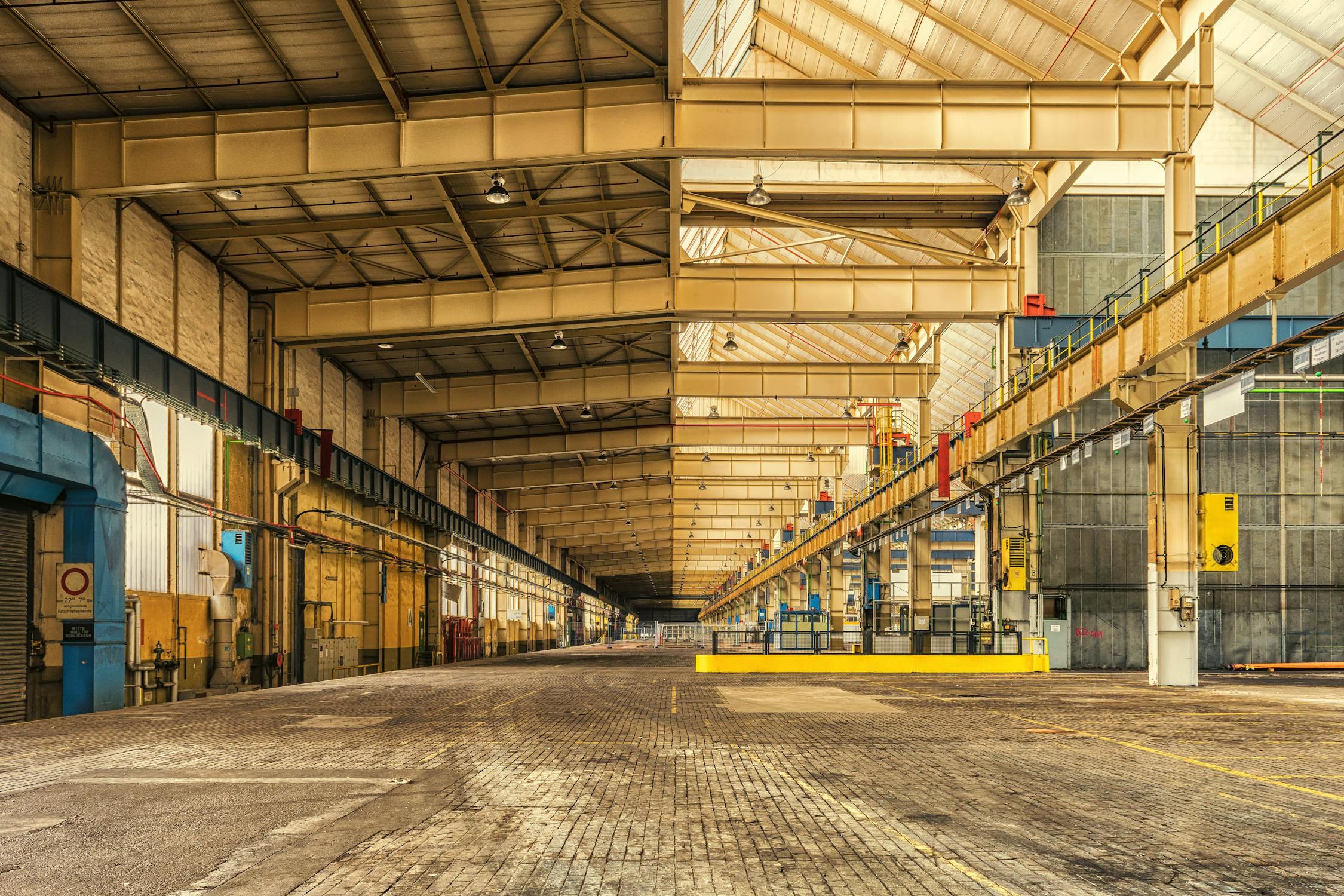
Every table and number below uses the same base case. It is a warehouse or industrial facility running 50 × 400W metal halide high bay fittings, 12 hours a day, five days a week. That is 3,120 operating hours per year. The LED replacement is a 150W UFO high bay, a direct swap that matches or exceeds the light output of a 400W metal halide while reducing consumption by 250W per fitting.
Base scenario: 50 fittings, 400W MH to 150W LED
The $400 per fitting cost (supply plus install) is based on a planned, daytime installation using a licensed electrician. Emergency or after-hours work costs more. Cheap-end supply-only products cost less but often deliver less, and the lm/W drop means you need more fittings to hit the same light levels. These numbers use a mid-market 150W fitting running around 130 lm/W.
State-by-state comparison
Commercial electricity tariffs across Australia range from around 25c/kWh in the ACT to 42c/kWh in South Australia. That 17c/kWh gap on 39,000 kWh of annual saving translates to a $6,630 per year difference in the dollar return from the same LED upgrade. Combine that with state rebate schemes and the spread in payback periods is significant.
| State | Tariff | Annual saving | Rebate scheme | Net capital | Payback |
|---|---|---|---|---|---|
| SA | 42c/kWh | $16,380/yr | REPS $4,000 | $16,000 | ~11 months |
| NSW | 29c/kWh | $11,310/yr | ESS $6,000 | $14,000 | ~15 months |
| VIC | 26c/kWh | $10,140/yr | VEU $5,000 | $15,000 | ~18 months |
| WA | 29c/kWh | $11,310/yr | No state scheme | $20,000 | ~21 months |
| TAS | 27c/kWh | $10,530/yr | No state scheme | $20,000 | ~23 months |
| NT | 27c/kWh | $10,530/yr | No state scheme | $20,000 | ~23 months |
| QLD | 26c/kWh | $10,140/yr | No state scheme | $20,000 | ~24 months |
| ACT | 25c/kWh | $9,750/yr | No state scheme | $20,000 | ~25 months |
Tariff sources: AEMC/AER commercial averages, 2025–26. Rebate estimates are indicative: ESS and VEU credits vary by product specification, accredited installer and current scheme rates. Always get a written rebate estimate from your installer before committing. The REPS figure uses SA Energy's current $80/fitting co-investment support for commercial high bay replacements.
Why South Australia is in a class of its own
SA's 42c/kWh commercial tariff is the highest in Australia, roughly 60% above the national average. That is usually framed as a problem. For a business running energy-intensive lighting, it is also the single biggest accelerator of LED payback available anywhere in the country. Every kilowatt-hour you stop using saves 42 cents. The 39,000 kWh annual saving from this upgrade is worth $16,380 per year in SA, against $10,140 in VIC or QLD.
Add the SA Retailer Energy Productivity Scheme (REPS), which provides around $80 per fitting for commercial high bay replacements in the current 2026–2030 round, and the net capital cost drops to $16,000. Divide that by the $16,380 annual saving and you have a payback of just under 12 months. For a capital-intensive business, that is effectively a guaranteed return of close to 100% in year one.
The rebate schemes that actually move the numbers
Three state schemes are worth understanding for high bay upgrades specifically.
NSW Energy Savings Scheme (ESS): The ESS pays accredited installers for verified energy savings in commercial and industrial buildings. For a 400W to 150W high bay replacement, the certificate value is typically worth $100 to $150 per fitting depending on current certificate prices. On 50 fittings that is $5,000 to $7,500 shaved off the capital cost, which is why NSW payback is competitive despite a mid-range tariff. The scheme is administered by IPART and requires an accredited installer.
Victorian Energy Upgrades (VEU): VEU operates similarly, with accredited installers generating certificates for verified upgrades. High bay replacements typically yield $80 to $120 per fitting. The scheme sometimes results in zero-cost installs for smaller commercial sites, though industrial high bay installations more commonly involve a co-payment. See our ESS/VEU/REPS explainer for how the certificate economics work in practice.
SA REPS: The 2026–2030 round is currently active. REPS works differently from certificate-based schemes: SA Energy provides direct co-investment support, which means the rebate amount is more predictable but the scheme has limited annual capacity. If you are in SA and considering a high bay upgrade, get a REPS-registered installer quote now rather than waiting.
QLD, WA, TAS, NT and ACT: None of these states has a current equivalent to ESS, VEU or REPS for commercial high bay upgrades. That does not mean the economics are bad. It means the payback runs 20 to 25 months instead of 11 to 18, and the federal Instant Asset Write-Off (or small business depreciation rules) does more of the heavy lifting. At 29c/kWh, a WA upgrade still returns over $11,000 per year on this scenario.
Operating hours change everything
The scenario above uses 12 hours per day, five days per week. Many warehouses run longer. A cold storage or 24/7 logistics facility running 20 hours a day, seven days a week clocks 7,300 operating hours annually. At those hours, the annual kWh saving on the same 50-fitting upgrade blows out to 91,250 kWh. In NSW at 29c/kWh, that is $26,460 per year in energy alone. Payback in that scenario: under seven months, with no rebate at all.
Operating hours sensitivity: same 50 fittings, NSW 29c/kWh
The number your energy consultant or lighting salesperson gives you is only as good as the operating hours they have used. Ask to see the hours assumption in writing. A quote built on 2,000 hours per year looks less compelling than one built on 3,500, and if your facility actually runs 4,000 hours, you are leaving money on the table by trusting someone else's guess.
Tax treatment: the fourth variable nobody mentions
The Instant Asset Write-Off (currently available for assets under $20,000 for eligible small businesses) allows the entire capital cost to be deducted in the year of purchase rather than depreciated over time. For a $20,000 upgrade, a business on a 30% tax rate sees a $6,000 reduction in its tax bill in year one. That effectively reduces net capital to $14,000 before any rebate is applied. Combined with a VEU or ESS rebate, some Victorian and NSW businesses are looking at net capital under $10,000 on this scenario.
The tax treatment applies across all states equally. It is state-agnostic and size-dependent. Talk to your accountant before approving a quote: for many businesses the first-year after-tax cost of an LED upgrade is considerably lower than the sticker price suggests.
What to check before signing a high bay quote
Payback calculations are only useful if the inputs are accurate. These are the three numbers most often wrong in supplier quotes.
LED wattage substitution: A 400W metal halide does not automatically need a 150W LED replacement. It depends on the lumen requirement of the space. A 150W LED at 130 lm/W produces 19,500 lumens. A 400W MH at roughly 80–90 lm/W produces 32,000 to 36,000 lumens. If you need that light level maintained, a 200W or 240W LED may be the right fit. Using a lower wattage than the space requires saves money on paper and creates a darker facility in practice. Get a lighting layout (lux plan) before committing to a wattage.
Installation type: High bay replacements typically require a licensed electrician to disconnect and rewire the existing batten or pendant. Some suppliers quote supply-only pricing that does not include this. Others quote "balloon" install costs that assume difficult access. Understand what your ceiling height, access equipment and installation method actually cost before comparing quotes.
Rebate eligibility: Not every product or installer is accredited under ESS or VEU. Confirm your installer's accreditation and ask for a written rebate estimate on the specific product before signing. A quote that assumes a $150/fitting VEU credit on a product that only qualifies for $60 significantly overstates the economic case.
 Run the numbers for your facility
Enter your state, existing lamp type, operating hours and fitting count to see your annual saving, payback period and rebate estimate. Takes about three minutes. No signup required.
Open the LED Savings CalculatorSummary
LED high bay upgrades are financially compelling in every Australian state. The payback ranges from around 11 months in SA to around 25 months in the ACT on a standard 50-fitting, 12-hours-per-day warehouse scenario. The three factors that drive the variation are electricity tariff (SA's 42c/kWh is the standout), state rebate scheme access (NSW ESS and VIC VEU each reduce net capital by $5,000 to $7,000 on this scale), and operating hours (longer hours shorten payback dramatically). Add tax treatment and the real after-tax, after-rebate payback is often a year or more shorter than the gross figure suggests.