 LED Savings
Efficacy Index
← Back to guides
LED Savings
Efficacy Index
← Back to guides
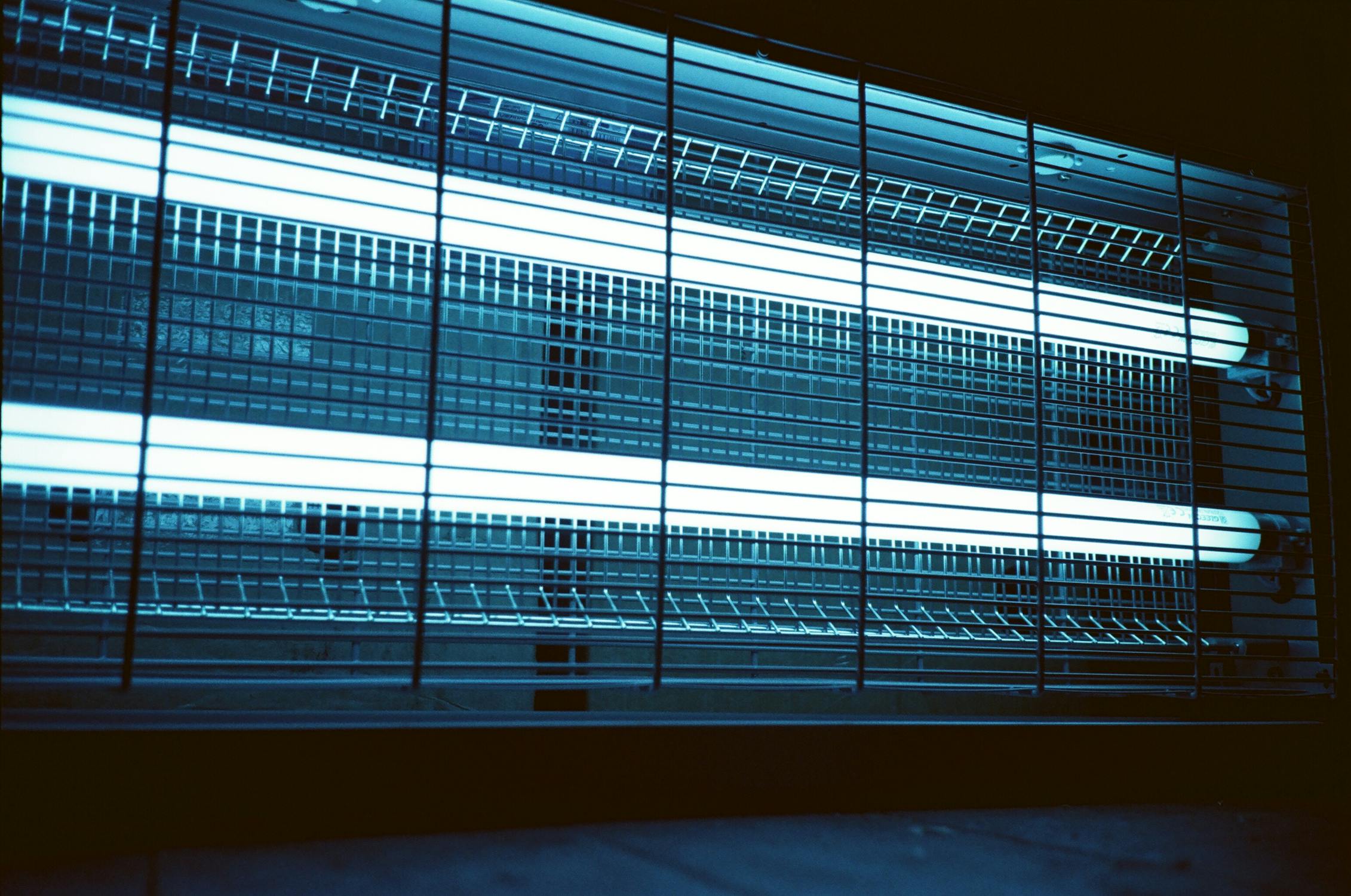
Why fluorescent lamps are being banned: the mercury problem
Every fluorescent lamp contains mercury: T8 tubes, T5 tubes, CFLs and circular fluorescents alike. It's not a trace amount or a manufacturing byproduct. Mercury is essential to how fluorescent lamps work: the electrical discharge excites mercury vapour, which produces UV light, which the phosphor coating converts to visible light. No mercury, no light.
Mercury is a persistent neurotoxin. Once released into the environment through broken lamps in landfill, or the tens of millions of tubes disposed of annually through general waste, entering soil and waterways, bioaccumulates in the food chain, and causes irreversible neurological damage. The global lighting stock represents one of the largest remaining mercury use categories in the world.
The Minamata Convention on Mercury is a United Nations treaty specifically targeting mercury pollution. Australia is a signatory. At the Fifth Conference of Parties (COP5) in November 2023, 147 member countries, representing essentially every significant economy, agreed to phase out the manufacture, import and export of all fluorescent lamps for general lighting. Not reduce. Eliminate.
The full phase-out timeline for Australia
Lighting Council Australia published its official lamp phase-out guidance in April 2026. Combined with Australia's Minamata Convention commitments and domestic GEMS Determinations, the picture is now clear:
Europe already went first: that's the supply chain problem
The European Union banned T8 and T5 fluorescent tubes in September 2023 under its updated RoHS (Restriction of Hazardous Substances) Directive. Europe was one of the largest fluorescent lamp markets in the world.
When a major demand source disappears from a global commodity product, manufacturing economics change fast. Factories that ran profitable production lines supplying Europe either close those lines, retool, or run down inventory. The products that remain get more expensive as volumes fall and economies of scale shrink. Supply gets patchier as fewer distributors stock them.
This is already happening. Australian wholesalers and facilities managers who order T8 tubes today are seeing longer lead times and less consistent supply than they were 18 months ago. That trajectory continues as 2026 and 2027 approach. The question is not whether T8 replacement tubes will become difficult to source in Australia. The real question is when your particular lamp type hits that wall.
If you are currently budgeting for ongoing fluorescent tube replacement as a maintenance strategy, that strategy has a hard expiry date. You can stock up ahead of the ban, but you're buying time, not a solution. Every tube that fails in an unbanned post-2027 building becomes an emergency LED retrofit rather than a planned upgrade.
The cost of an emergency re-lamp, including after-hours call-out, the premium on whatever LED solution fits an unfamiliar fixture, and the lost productivity of dark fittings, is consistently higher than a planned upgrade done at your schedule and budget.
What's actually in your ceiling, and when it bites
The distinction between halophosphate and tri-band phosphor tubes matters for timing, but identifying which type you have isn't always straightforward from the outside. A rough guide:
| Tube type | Typical colour appearance | Common era | Phase-out |
|---|---|---|---|
| T8 halophosphate (cool white / warm white) | Flat, slightly yellow-white | Pre-2000 installs | 2026 |
| T8 tri-band (cool white, 4000K, daylight) | Crisper, whiter light | 2000–2015 installs | 2027 |
| T5 (all types) | Slimmer tube, typically brighter | 2005–2018 installs | 2027 |
| LED T8 retrofit tube | N/A, varies by colour temp | 2015–present | No ban |
| LED batten / panel | N/A, varies by colour temp | 2015–present | No ban |
Most Australian commercial and industrial buildings constructed or last refitted between 1985 and 2015 are running T8 tubes, the single most common commercial light source in the country. A warehouse built in 1998 with 200 T8 battens, a 2005 office fit-out with recessed T8 troffers, a 2012 retail store with T5 strips: all of them are looking at a forced change within the next 12–18 months, or being stranded with no replacement source.
The cost of waiting vs the cost of acting now
The financial case for an LED upgrade on a fluorescent fit-out has never been stronger, and the regulatory deadline makes the "we'll get around to it" position increasingly difficult to justify. Here is what the numbers look like for a typical example:
That's an already-compelling case. But the regulatory context adds a dimension the pure energy economics don't capture: every year you delay, you are running a technology that is being withdrawn from supply while continuing to pay energy costs that are higher than they need to be. You're also losing rebate access. NSW ESS and VIC VEU scheme parameters change over time, and rates that are available now may not be available in two years when your hand is finally forced.
What the Lighting Council Australia is saying
Lighting Council Australia, the peak body for Australia's lighting industry, listed fluorescent phase-out as a top-two advocacy priority in its 2023/24 report, alongside halogen phase-out. In April 2026, LCA published a comprehensive "Australian Lamp Phase-Outs" briefing document, the most current official summary of where every lamp type sits in the regulatory timeline.
LCA CEO Malcolm Richards has consistently framed this as an industry-wide transition, not just a regulatory compliance task. In a June 2024 media release, the Council called for "an LED revolution for a more energy efficient Australia," explicitly framing the fluorescent phase-out as the single biggest remaining opportunity in commercial lighting energy reduction.
The industry view is clear: the transition is happening, the timeline is set, and the businesses that plan it on their terms get better outcomes than those that are pushed into it by a broken lamp and an empty wholesaler shelf.
State rebate schemes: the window is open now
Three Australian states currently offer significant incentives for commercial LED upgrades. These schemes exist specifically because fluorescent-to-LED replacement is one of the most cost-effective energy reduction measures available, and governments want to see it happen faster:
- NSW Energy Savings Scheme (ESS): typically $80–$200 per fitting for commercial T8 replacements. Administered by IPART, requires an accredited installer.
- Victorian Energy Upgrades (VEU): accredited installers access credits for LED upgrades, typically worth $50–$150 per fitting depending on wattage reduction. Sometimes results in zero-cost installs (see our guide on what that actually covers).
- SA Retailer Energy Productivity Scheme (REPS): co-investment support for upgrades. SA's 42c/kWh commercial tariff (highest in Australia) makes LED payback especially compelling; the 2026–2030 REPS round is currently active.
These schemes are not permanent. They exist while there is significant unconverted legacy stock to target. As the market transitions, accelerated by the mandatory phase-out, scheme administrators will recalibrate. The window for the current generation of incentives is open now. It will not stay open indefinitely.
If your building still has fluorescent tubes: run the numbers. The LED Savings Calculator at ledsavings.com.au takes your lamp type, your state, your operating hours and your electricity tariff and shows you the annual saving and payback period, including your rebate estimate and tax deduction. It takes about three minutes and gives you the foundation for a budget conversation with your landlord, board or finance team.
You don't need to have the upgrade done this week. You need to know what it costs, what it saves, and when it makes sense, before the choice is made for you.
Questions worth asking before your upgrade
When you're ready to get quotes, a few questions make a significant difference to the outcome:
Is this a Type A (ballast-compatible) or Type B (direct-wire, ballast bypass) install? Type B removes the ballast entirely: the most failure-prone component in a fluorescent fitting. Type A leaves it in place. On a planned upgrade, there is almost never a good reason to leave the ballast behind. See our T8 to LED guide for a full breakdown of why this matters.
What is the lumen output of the replacement, not just the wattage? An 18W LED tube does not replace a 36W T8 at equivalent brightness. A proper like-for-like replacement requires 25–28W at 120–130 lm/W. Check the spec sheet, not the marketing headline.
Is the product on the VEU/ESS approved list, and at what minimum specification? Scheme-approved products meet entry-level thresholds. Entry-level is not the same as best value over a ten-year horizon.
What is the warranty, and who backs it? A five-year warranty from an importer without local manufacturing is only as good as that importer's trading future. Ask who the manufacturer is and what the warranty claim process looks like.