 LED Savings
Efficacy Index
← Back to calculator
LED Savings
Efficacy Index
← Back to calculator
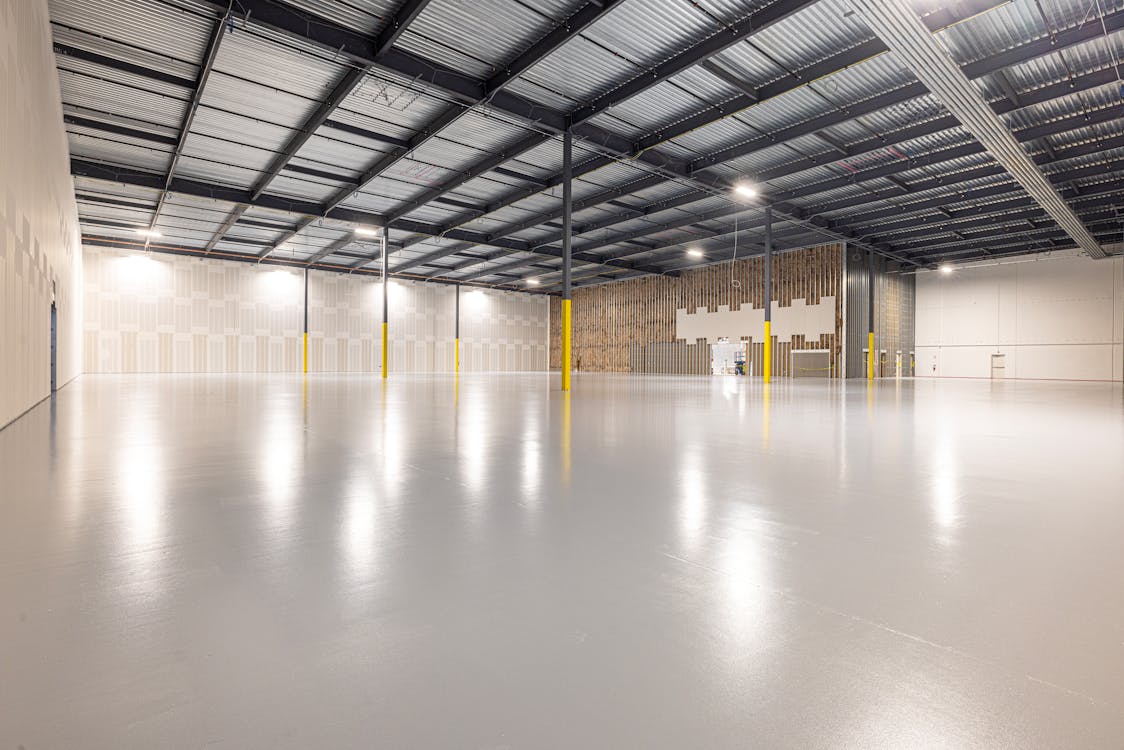
1. The watt-for-watt substitution table doesn't add up
Watt substitution tables, the kind that say "replace your 400W metal halide with a 150W LED", are based on nothing more than rough industry habit. The actual number you need comes from lumens, not watts.
A standard 400W metal halide high bay produces around 35,000 lumens. To match that with LED, you divide by the LED's efficacy, the lumens it delivers per watt (lm/W). Here's what the maths actually looks like:
| LED efficacy tier | lm/W rating | LED watts needed to match 400W MH |
|---|---|---|
| What substitution tables assume | ~233 lm/W | 150W ← not commercially available |
| Standard commercial high bay | 110 lm/W | 318W |
| High performance high bay | 140 lm/W | 250W |
| Premium (top-tier) | 170 lm/W | 206W |
For a 150W LED to legitimately replace a 400W metal halide, it would need to produce 233 lumens per watt. No commercial high bay fitting on the Australian market does that. The closest premium products are pushing 170–180 lm/W under lab conditions.
A 150W LED at a genuine 140 lm/W produces 21,000 lumens. That's 60% of the original light output. A warehouse running at 60% of its designed light level isn't just uncomfortable. It's a safety issue, and it's a lux level that almost certainly won't pass a lighting audit.
If your quote specifies a 150W LED replacing a 400W metal halide, ask the supplier to show you the lm/W rating of that specific fitting and do the division yourself. If the answer is anything below 200 lm/W, you're getting less light than you had before.
2. The lm/W number on the spec sheet is optimistic
Here's the part most suppliers won't bring up: LED efficacy figures in catalogues and marketing materials are routinely 10–15% higher than real-world performance.
Manufacturer ratings are measured under controlled lab conditions, specific ambient temperature, brand new driver, optimal operating current. That's not your warehouse ceiling in a Queensland summer with a fitting that's been running flat out for 18 months.
In practice, expect real-world output to sit around 10–15% below the rated figure, especially after the first year of operation. A fitting marketed at 140 lm/W will realistically deliver somewhere between 120–128 lm/W in service.
Run that conservative figure through a 400W metal halide replacement and you need closer to 274W of LED, not 250W. Across a 50-fitting warehouse, that's the equivalent output of an extra 10 fittings you're short. Before you've even turned on the lights for the first time.
This isn't about always buying the most expensive product. It's about speccing the job using the realistic figure, not the marketing figure. A 10% buffer in your lm/W calculation costs almost nothing at spec time and prevents a lot of headaches six months after installation.
Ask suppliers for an IES photometric file from an independent test lab, not just the catalogue lm/W figure. Reputable fitting manufacturers will have these. If they can't provide one, that tells you something.
3. The "no cost" VEU fitting might cost you more in the long run
Victoria's Energy Upgrades (VEU) program has helped a lot of businesses get LED projects off the ground that otherwise wouldn't have happened. That's genuinely good. But it's also created a situation where property owners are saying yes to free fittings without asking what they're actually getting.
Here's how it plays out: when an installer is recovering their costs through VEU credits, they have every incentive to use the fitting that qualifies for the scheme at the minimum specification. Not the one with the best driver. Not the one with a meaningful warranty. The one that ticks the scheme's boxes and leaves the most margin in the job.
A property owner who pays nothing upfront for their LED upgrade might be looking at a second upgrade by year four because the first batch of fittings has started failing. That's not a saving: it's a deferred cost with scaffolding included.
Before you sign off on any rebate-funded upgrade, ask these questions specifically:
What brand is the driver, and what's its warranty? The driver is the component most likely to fail, and it's often warranted separately from the LED module. Some fittings carry a 5-year fitting warranty but only a 1-year driver warranty, which means the part that actually fails isn't covered.
Is the manufacturer still likely to be trading in three years? There are a lot of fittings on the Australian market from brands that are effectively just a local importer of whatever's available from Shenzhen this season. If the brand disappears, so does your warranty claim.
What's the lm/W rating of the specific fitting being installed? Get the model number. Look it up. If it's not on the manufacturer's website with a spec sheet, ask why.
A free fitting that fails in three years and needs a paid replacement costs more than a quality fitting you paid for upfront. The maths on VEU still works, just don't let "no upfront cost" be the only thing you're evaluating.
Running your own numbers before you commit
The simplest way to pressure-test a metal halide to LED quote is to get the lumen output of your existing fittings and run the lumen-based calculation yourself, using a conservative lm/W figure, not the catalogue number.
For most commercial-grade high bay fittings being installed in Australian warehouses today, 110–120 lm/W is a realistic working number for speccing purposes. If a supplier is quoting you on a 140+ lm/W basis with a brand you've never heard of, dial it back 15% and see what wattage you actually need.
Use the LED Savings Calculator below to run your numbers. Select your state tariff, enter your existing lamp's lumen output, and choose the "Standard" efficacy tier as your conservative baseline, regardless of what the supplier's catalogue says. That gives you the wattage requirement and annual energy saving you can actually rely on.